
Buying land or property in Lagos can feel like walking through a minefield blindfolded. One wrong step, one document you didn’t verify, one agent you trusted too quickly, and you could lose your life savings to a plot of land that was never really for sale.
This is not a scare piece meant to frighten you away from property investment in Lagos. It is a practical, Lagos specific reference so you know exactly what to check before you hand over a single naira.
Why Lagos is Such a Fertile Ground for Property Fraud
Lagos has a unique mix of conditions that make real estate scams in Lagos more common than in many other parts of the country. A huge volume of land sales happen informally, outside any registered process. Much of the land has been passed down through families for generations, often with no formal registration at all. Because of this, the same piece of land can end up with several overlapping or disputed claims. On top of all this, the title registry system that is supposed to protect buyers is one that most people never learn to use properly, so fraud slips through gaps that a little knowledge could have closed.
Understanding these conditions is the first step to protecting yourself. Below are the nine scams you are most likely to encounter, and what you can do about each one.
1. Multiple Sale of the Same Land (The Omonile Problem)
If there is one issue that defines land scams Nigeria buyers face in Lagos, it is this one. Omoniles are traditional family landowners, or their descendants, who hold customary rights over land that has often been in their family for generations.
The problem starts when one member of the family, acting without the knowledge or consent of the rest, sells a plot to a buyer. Sometimes that same plot gets sold again to another buyer a few months later, by a different family member who was equally unaware of the first sale. This is why the Omonile problem is uniquely common in fast developing corridors like Ibeju Lekki, Ajah, and Epe, where land value is rising quickly and the pressure to sell before prices go up further is high on all sides.
Here is where a bit of critical thinking matters. A person who sounds convincing, who knows the family history, who can point to the land and speak about it with authority, is not automatically the legal owner. Being a “family representative” is a social role, not a legal one. Verified legal ownership only exists on paper, confirmed at the appropriate government registry, and that is the only thing that should determine whether you proceed.
2. Forged or Fake Title Documents
A forged Certificate of Occupancy, Governor’s Consent, or survey document can look completely convincing. The paper stock, the stamps, the signatures, even the language used, can all be reproduced well enough to deceive an untrained eye.
This is the core lesson every buyer needs to internalize: a document that looks real is not the same as a document that has been verified at its source. No matter how official something appears, its authenticity can only be confirmed by checking it directly with the issuing authority, not by how convincing it looks on the page.
3. Impersonation of Landowners or Agents
Some fraudsters go a step further than fake paperwork. They pose as the actual titleholder of a piece of land, or as a registered agent representing a legitimate developer, purely to collect a deposit for land they have no claim to whatsoever.
By the time the buyer realizes something is wrong, the person has often disappeared, and there is no real landowner or developer behind the transaction to hold accountable. This is one of the reasons why checking how to know if land is genuine in Lagos should always include confirming, independently, that the person you are dealing with is who they claim to be.
4. Government Acquisition or Setback Land Sold as Buildable
Some land in Lagos falls within areas that the government has acquired, or that sit within a road setback or a utility right of way. This kind of land cannot legally be built on, no matter what a seller tells you.
The tragedy here is how often this is only discovered after construction has already begun, when a stop work notice arrives and the buyer is left with a half built structure they cannot legally complete. This is a scam that can be avoided entirely with one simple step: checking the land’s status before you build, not after.
5. Fake Developer or Non Existent Estate Schemes
Slick marketing, professionally designed brochures, and sometimes even a show site or a model home, can all be built around an estate that does not legally exist, or that the so called developer has no actual rights to build on.
The polish of the marketing has nothing to do with the legitimacy of the project. In fact, buyers should treat unusually impressive marketing with a bit more scrutiny, not less, since a well funded scam can often out market a genuine but modest developer.
6. Inflated or Fake Agency Fees With No Service Behind Them
Not every scam involves losing the full price of a property. Some agents charge significant fees for viewings, documentation, or what they call “processing,” without delivering any real service in return. Because these fees are often paid informally, there is usually no clear way for the buyer to verify what the fee was actually for.
If an agent cannot clearly explain, in specific terms, what a fee covers, that is a fair reason to pause and ask more questions before paying.
7. Family Land Sold Without Full Family Consent
This scam is related to the Omonile problem, but it is distinct enough to deserve its own place on this list. Here, one family member sells land that, under family or customary law, actually requires the consent of multiple heirs or the entire family unit.
The dispute usually does not surface immediately. It can take months, sometimes years, before other family members find out and challenge the sale, by which point the buyer has already paid in full and may have started developing the land.
8. Pressure to Pay Immediately
Watch closely for this one, because it is designed to bypass your judgment rather than convince it. A seller or agent insists that a discount, or the plot itself, will disappear within hours if you do not pay right away.
This pressure is rarely about genuine scarcity. It is deliberately used to remove the time a buyer needs to verify title, inspect the property, or have a contract reviewed by someone qualified to do so. It is worth stating plainly: legitimate transactions do not require rushed decisions. Any deal that cannot survive a few days of proper checking was probably not a good deal to begin with.
9. Agents Who Block Direct Communication With the Developer
This is a warning sign that is easy to miss because it can look like the agent is simply being helpful or efficient. But if an agent consistently prevents you from speaking directly with the actual landowner or developer, or refuses to provide official documentation you can verify independently, that pattern is worth pausing on.
A genuine agent representing a legitimate deal has no real reason to keep a buyer away from the source. When that access is blocked again and again, ask yourself why.
How to Verify Land Legitimately to Avoid Real Estate Scams in Lagos
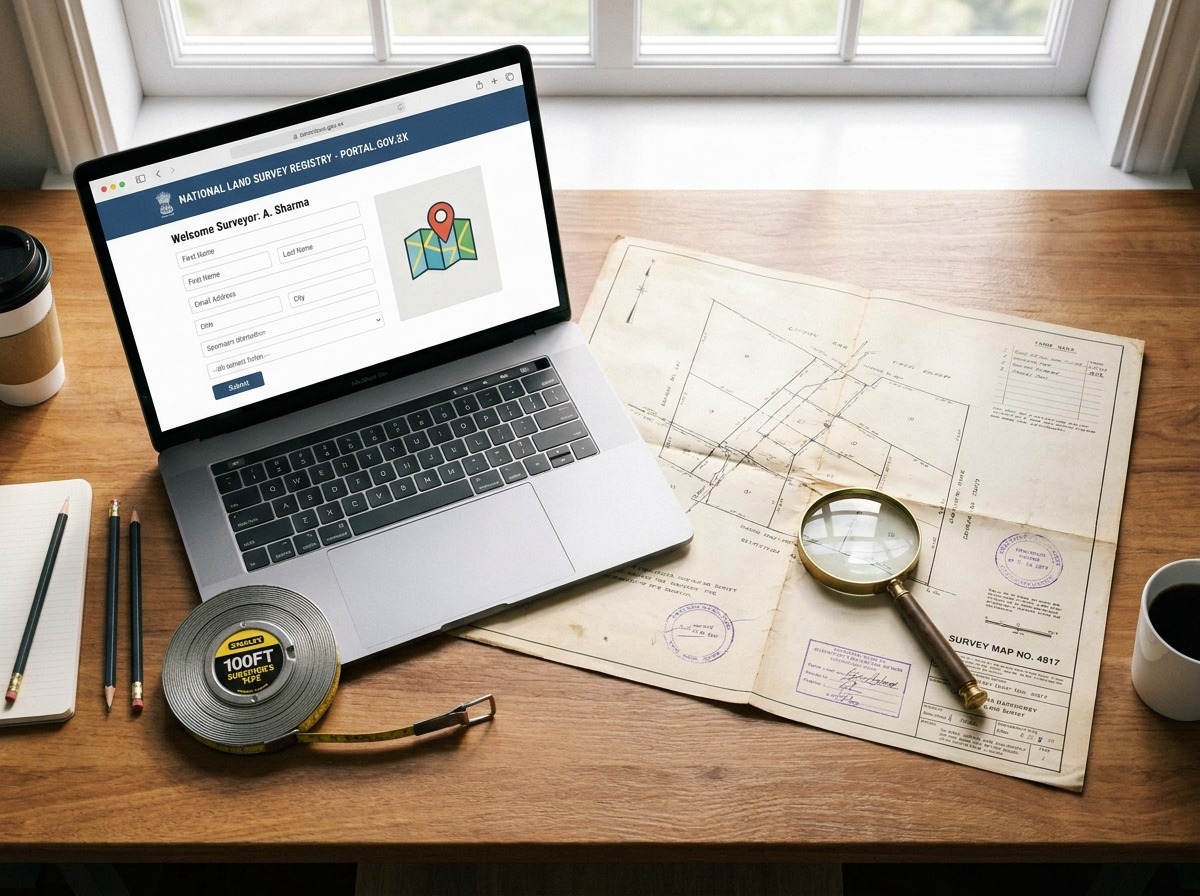
Knowing the scams is only half the work. Here is a clear, procedural checklist for how to know if land is genuine in Lagos before you commit any money.
- Search the Lagos State Land Registry directly. Do not rely only on documents shown to you by the seller or agent.
- Confirm Governor’s Consent or Certificate of Occupancy status independently, through the registry itself, not through the paperwork alone.
- Engage a licensed surveyor to confirm boundaries and check for any encumbrances on the land.
- Cross check with the local community or family where relevant, particularly for land outside formally registered estates.
- Verify the agent or company’s registration status with LASRERA, the Lagos State Real Estate Regulatory Authority. This is the actual regulator for real estate professionals in Lagos, and confirming registration with them, specifically, is far more useful than simply trusting “relevant authorities” in general.
If You Are Mid Transaction and Suspect Fraud
If something starts to feel wrong partway through a deal, stay calm and take these steps.
Pause the transaction and do not make any further payments. Request all prior communication and documents in writing, so there is a clear record of everything that has been said and shared. Then involve an independent property lawyer, one who was not part of the original introduction to the deal, before you proceed any further in either direction.
If You Have Already Been Defrauded
If you have already lost money to one of these scams, here is how to move forward.
Document everything: payments made, messages exchanged, and any documents you received. Report the matter to LASRERA and to the Nigeria Police Force’s relevant unit. Then consult a property lawyer about your options for recovery. It is important to be realistic here. Recovery is possible in some cases, but no outcome can be guaranteed, and moving quickly with proper documentation gives you the best possible chance.
Conclusion
Working with a registered, verifiable agency does not eliminate risk entirely. No single step can promise that. But it does remove an entire category of risk, because a legitimate company has a reputation and a business to protect, which gives them a real incentive to deal honestly.
If you are ready to explore verified listings without the guesswork, take a look at our Beyond Reliable Properties Catalogue for properties that have already been through proper due diligence.
Beyond Reliable Properties team have years of firsthand experience helping buyers verify land titles, vet developers, and avoid scams and pitfalls in the Nigeria property market. If you have questions about a specific property or developer, our team is available to help you check before you commit. Lead Consultant Adejoke Adeyinka